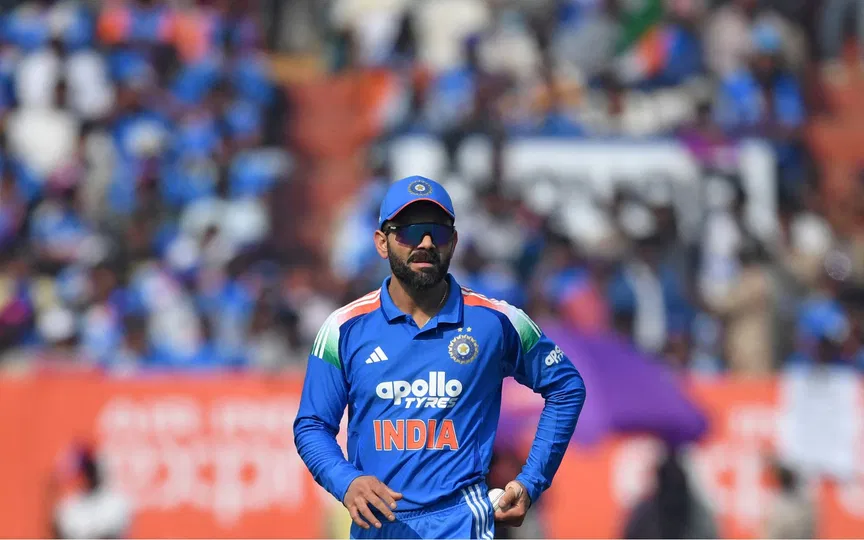
(1).jpg?type=hq) Virat Kohli and Rohit Sharma (Source: AFP)
Virat Kohli and Rohit Sharma (Source: AFP)
Only a day after Rohit Sharma (No.1) and Virat Kohli (No.2) topped the ICC ODI batters Rankings, reports have emerged that the Board of Control for Cricket in India (BCCI) may be looking to revise their central contract with the apex body. Notably, Kohli and Rohit have retired from Tests and T20Is, making them available only for the twenty-over format.
Hence, BCCI's Annual General Meeting (AGM), which is set to be held on December 22, could see a shift in the Indian legendary duo's annual contracts.
What are the Annual Player Contracts for Team India?
The BCCI central contracts are a very carefully assessed tool devised to reward players' performance, incentivize participation across formats, especially in the Test format. The categories also ensure the maintenance of the highest standards of professionalism within the squad.
The BCCI Central Contracts structure categorises top Indian cricketers into four grades: A+, A, B, and C, for annual retentions. This also grants salaries of ₹7 Cr, ₹5 Cr, ₹3 Cr, and ₹1 Cr respectively, plus match fees and perks, based on performance, consistency, and commitment across formats.
Moreover, the A+ is reserved for elite all-format players, who, according to the current contract list, include Jasprit Bumrah, Ravindra Jadeja, Rohit Sharma, and Virat Kohli, who are now available for only one format. At the same time, the system rewards performance and ensures financial stability for national team players.
.jpg)
How are the grades allocated in BCCI annual central contracts?
Under the apex body of cricket in India's central contracts, the players are graded through an annual practice, conducted in closed rooms, undertaken by the selection committee, the head coach, and the team captain.
Here's how the grades are decided:
1. Format Priority and Participation
It is noted that players who make Test cricket a priority and display performance in the format are preferred for the higher categories, including Grade A and above. Moreover, the top bracket, the A+ category, is reserved for the best all-format players.
2. Minimum Match Criteria, Performance, and Consistency
A player has to participate in a decided number of matches even to be eligible for the lowest Grade C. Usually, a player must have played at least 3 Tests, or 8 ODIs, or 10 T20Is for the national team, to be considered in the categories. However, it is essential to note that a player can't get promoted merely by the increase in the total matches.
Here comes the performance and consistency of the player. The category of a contracted player depends on the player's regular impact on the field during the contract cycle. However, exceptions are made in the case of the top tyre players. A dip in form or fitness-related issues won't affect their category.
3. Commitment to Domestic Cricket
In the recent years, the BCCI has strictly mandated the centrally contracted players to participate in the domestic circuit, if not on national duty. The latest cases of Shreyas Iyer and Ishan Kishan being dropped from the central contracts due to their absence from domestic matches underscore the BCCI's firm stance on domestic inclusion.
The BCCI last awarded the central contracts to its players in April 2025, which included Rohit and Virat in the top A+ category. However, a lot has changed since the last announcement. Their retirement from Tests and T20Is, and the BCCI's strong stance in domestic cricket, put their eligibility for an A+ grade in question.
Nonetheless, their unmatched legendary status and fandom may help them retain it. That being said, it will be fascinating to see which category BCCI places the greatest Indian batters, Virat Kohli and Rohit Sharma, in.
.jpg?type=mq "PS vs SS match report")