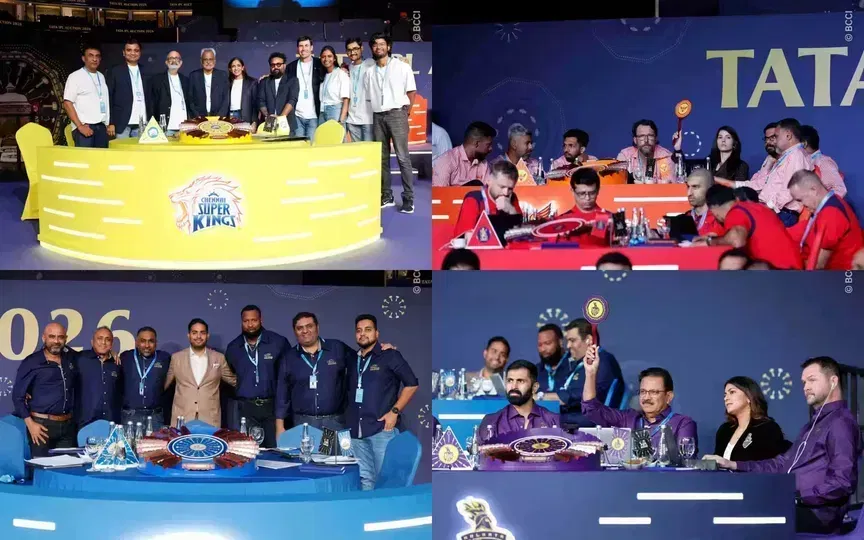
 IPL 2026 auction (Source: @Iam_Sh05,x.com)
The IPL 2026 mini auction concluded with all 10 franchises filling their squads to capacity, setting the stage for an exciting season starting March 2026.
A total of ₹204.45 crore was spent on 77 players, including 29 overseas stars. While some teams made record-breaking purchases, others opted for strategic, low-risk additions. Here’s a detailed, team-wise analysis of the major takeaways from the IPL 2026 auction.
KKR: Cameron Green's record signing
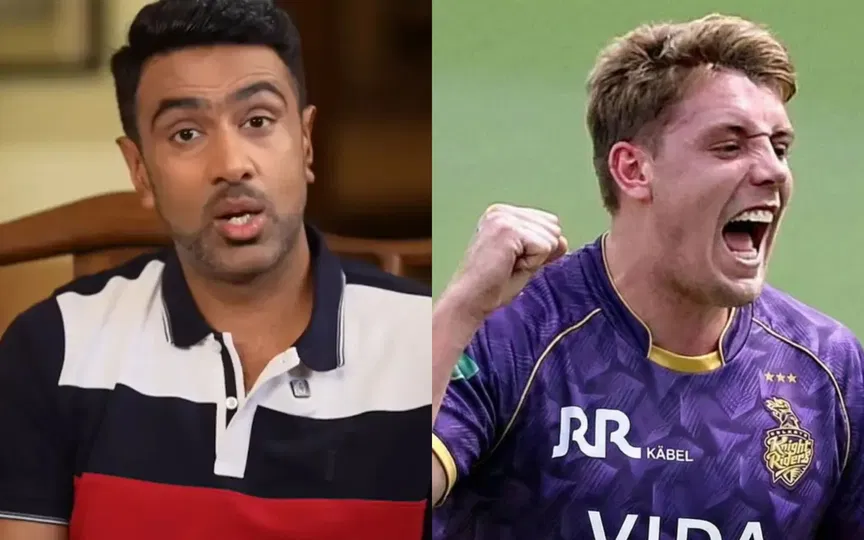
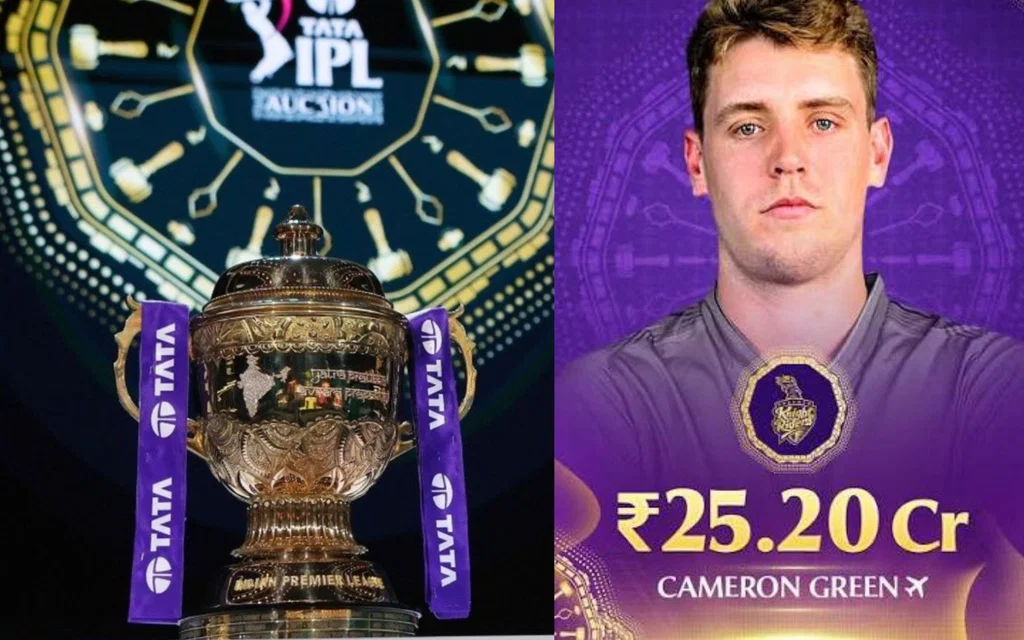
Kolkata Knight Riders (KKR) set the auction alight by snapping up Australian all-rounder Cameron Green for a record ₹25.2 crores, making him the most expensive overseas player in IPL history.
Green has an average of 41.58 and strike rate of 153.69 and has taken 16 wickets in 29 IPL matches. He is expected to fill the void left by Andre Russell. KKR's strategy of going all out for a top-quality all-rounder clearly reflected their intent to strengthen the middle order significantly.
CSK: Betting big on uncapped talent
CSK surprised everyone by shifting from their usual 'experience-first' approach. The franchise spent INR 14.2 crore each on uncapped players Prashant Veer and Kartik Sharma, using two-third of their auction purse on just two players.
They also secured Akeal Hosein and Matt Henry as strategic overseas picks. While this approach brings excitement and potential, the lack of top-quality experience in key areas could pose early-season challenges.
RCB: Venkatesh Iyer's bargain buy
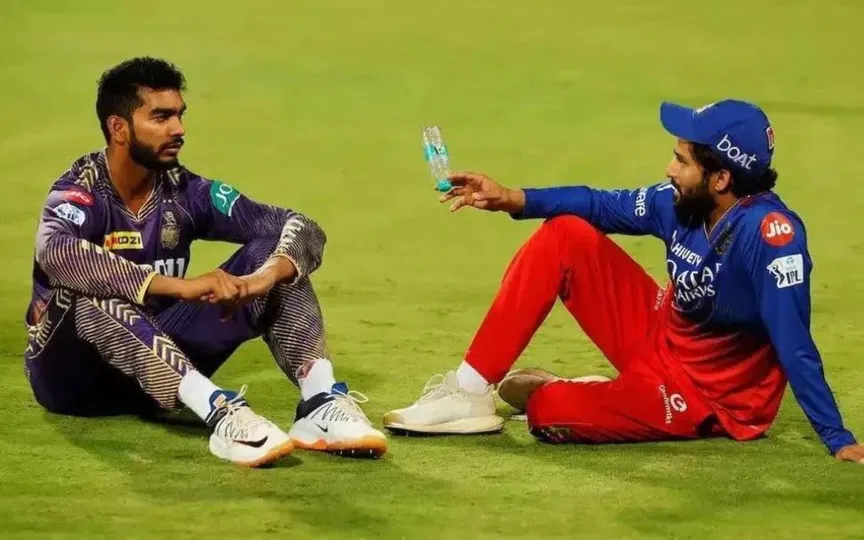
RCB made a smart acquisition by securing Venkatesh Iyer for ₹7 crore. With a stellar IPL record at the no.3 position, where Venkatesh Iyer is likely expected to play for the defending Champions (562 runs at an average of 43.23 and a strike rate of 168.77). With Iyer's inclusion, RCB has strengthened their middle order and overall batting depth.
Other picks like Jacob Duffy (₹2 crore) and Mangesh Yadav provide overseas cover, while most of RCB's core lineup, including Virat Kohli and Rajat Patidar, remains unchanged. RCB’s strategy shows a preference for small, impactful tweaks rather than massive changes.
DC: Squad versatility at its best
Delhi Capitals focused on building a versatile and adaptable squad in the IPL 2026 mini-auction. One of their main strengths is the flexibility in both batting and bowling.
At the top of the order, DC has several choices. While Pathum Nissanka or Ben Duckett are likely to open, the team can quickly pivot to experienced Indian openers KL Rahul or Prithvi Shaw if the top order struggles. This combination ensures that DC has reliable firepower at the top while keeping flexibility in case of poor form or injuries.
The team also strengthened its death-over bowling, making DC well-rounded squad. Overall, Delhi Capitals addressed their key gaps by strategically adding both Indian and overseas talent.
.jpg)
PBKS: Role-based additions
PBKS kept their auction simple and focused. Cooper Connolly replaces Josh Inglis, and left-arm seamer Ben Dwarshuis adds T20 experience to cover injury-prone pacers. Praveen Dubey and Vishal Nishad offer depth in spin and seam departments.
By focusing on specific gaps without overspending, PBKS retained balance in the squad, though minor concerns remain about depth in key positions.
MI: Smart Low-Risk Moves
MI had a stable squad and only targeted five vacant slots. They secured four, including Quinton de Kock and left-arm spin allrounder Atharva Ankolekar, both at the base price.
Re-acquiring de Kock for ₹1 crore is seen as a smart, low-risk move. Though he had a disappointing 2025 season with KKR (152 runs in eight matches at an average of 21.71), his proven track record and match-winning ability make him a valuable addition.
MI’s focus on all-rounders ensures flexibility, allowing players to contribute as batters, bowlers, or both depending on team needs.
.jpg)
RR: Spinners reinforced
RR targeted replacements for spinners Wanindu Hasaranga and Maheesh Theekshana. They successfully acquired Ravi Bishnoi for ₹7.2 crore and added leg-spinner Yash Raj Punja and left-arm wrist-spinner Vignesh Puthur. Overseas pacer Adam Milne provides backup for Jofra Archer.
While RR has strengthened spin and pace options, they may feel the absence of a strong all-rounder.
LSG: Missed opportunities
LSG released David Miller but failed to secure a proven finisher. Their key buys included Josh Inglis (₹8.6 crore), uncapped Mukul Choudhary (₹2.6 crore), and injury-prone Anrich Nortje (₹2 crore).
Though Wanindu Hasaranga adds batting depth, LSG's lineup still appears top-heavy, with concerns over finishing ability and injury risks in their bowling squad.
.jpg)
GT: Conservative Approach
GT entered the auction with ₹12.9 crore and few gaps. Their biggest buy was Jason Holder, competing with Glenn Phillips for a spot in the playing XI. Tom Banton and Luke Wood were added as back-ups in IPL 2026 auction, along with uncapped Indian fast bowlers Ashok Sharma and Prithvi Raj Yarra.
Gujarat is one of only two teams not to fully utilise their overseas quota alongside LSG, opting for a conservative approach.
SRH: Late but bold moves
SRH, despite holding the third-largest purse, acted late in the auction. Liam Livingstone was their only major buy for ₹13 crore. They added domestic seamers such as Praful Hinge and left-arm wrist-spinner Krains Fuletra.
SRH lost out on Ravi Bishnoi after bidding ₹7 crore, leaving their spin attack relatively inexperienced. The team's late approach creates uncertainty, but strategic additions could balance gaps if domestic players perform.