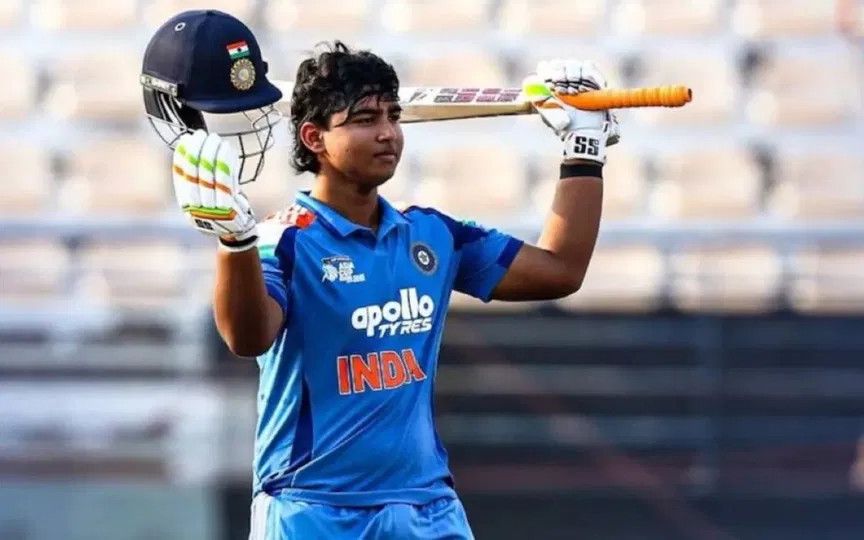
![Vaibhav and Ishan scored 36 and 33-ball tons in VHT R1 [Source: SDhawan25, BCCI Domestic/X.com]](https://onecricketnews.akamaized.net/parth-editor/oc-dashboard/news-images-prod/1766662982052_Vaibhav_Suryavanshi_Ishan_Kishan.jpg?type=hq) Vaibhav and Ishan scored 36 and 33-ball tons in VHT R1 [Source: SDhawan25, BCCI Domestic/X.com]
Vaibhav and Ishan scored 36 and 33-ball tons in VHT R1 [Source: SDhawan25, BCCI Domestic/X.com]
The round 1 fixtures of the Vijay Hazare Trophy 2025/26 saw some batters going all guns blazing and scoring centuries at an unprecedented strike rates. The day saw multiple batting records going for a toss, with as many as 22 batters scoring centuries on a single day, including a 212 (169) for Odisha's Swastik Samal.
Among some records tumbling on Wednesday included three of the five fastest List A centuries for Indians, with Sakibul Gani, Ishan Kishan and Vaibhav Suryavanshi adding their names to the list. Despite Kishan's 125(39), his team ended up losing the match, as Karnataka chased the total down and created another record for the biggest run-chase in VHT.
Additionally, Vidarbha's 382 was also chased by Bengal with 7 balls left, alongside Saurashtra's 347-run chase vs Odisha and Delhi's 299 chase vs Andhra in just 37.4 overs. By the end of Round 1, the 22 hundreds scored across 18 matches broke the previous record of 19 tons in a day from December 12, 2021.
Here's a brief look at the reasons behind such high scores in Vijay Hazare Trophy.
1. Quality of Plate Group bowling attacks
The teams from North-East alongside Puducherry and Uttarakhand were introduced to the domestic structure in 2018/19 when the domestic tournaments were expanded to 37 teams. Bihar also rejoined the structure in the same year, after a 14-year-long time out. Eventually Chandigarh completed the roster of 38 teams in 2019.
The lack of structure and in North Eastern cricket means they are still at the very early stages of their development and the facilities at players' disposal varies from what the established associations provide. Hence, the quality of cricket is currently under-par, which is evident when they face bigger teams. Piles of runs are scored and records are broken left, right and center.
2. Flat batting surfaces
In recent years, the pitches — especially in white-ball tournaments — have seen a trend of getting flatter to make the matches high-scoring to attract new interest and audience to the matches. There has been noted criticism for the lack of help for the bowlers from the wickets, apart from the first few overs, where the ball is new or when the weather helps the pacers during mornings. These batter-friendly conditions help the batters to attack fearlessly, which yields them results more often than not.

3. Shortened boundaries
In expansion of the batter-friendly conditions, the boundaries in domestic cricket are shortened at almost every venue. At some venue, like the academy and college grounds, where these fixtures are played, the boundaries even range between 55 to 60 meters, which is extremely small for modern-day batters to clear, especially with the quality of bats they use, where even mishits go out of the ground. The round 1 matches saw the likes of Suryavanshi and Ishan score 15 and 14 sixes, respectively.
4. Audacious batting
The batters in current day and age have evolved incredibly due to the increasing T20 cricket, where they are fearless to experiment and are able to hit the ball at any corner of the ground. Due to the aforementioned factors, batters are aware of the lack of help for the bowlers and do not try to hold back. Even in tough situations, the batter mindset has shifted to doubling down to counter-attack rather than playing out the situations before accumulating runs.
Conclusion - Is the scoring rate in domestic cricket concerning?
The high-octane scoring in white ball domestic cricket has skewed a lot of batting statistics and made the record tough to contextualise. The gulf between quality of opposition, especially when talents like Suryavanshi are present makes it even more difficult for the bowling teams to stem the run-flow.
While attacking cricket has been on a forefront across the globe, the BCCI needs to make sure the bowlers are also being helped with slightly neutral pitches, which facilitate an even contest between bat and ball, especially with the smaller dimensions of some grounds.
In a nutshell, the trend in scoring rates can be considered concerning. The help from the pitches makes it tough to judge a batter's quality and depletes their chances of doing well if they are presented with opportunities of facing quality attacks and tougher oppositions, in turn further raises questions on whether domestic performances should be rewarded with further opportunities.
The BCCI should ideally also re-structure the Plate Group and present them with opportunities, where they get develop, rather than just being left with no place to hide against top opponents. This will also ensure the talent from the top teams face better opponents for their growth than just betting their stats.