![The revolving door of vice-captaincy [Source: @mufaddal_vohra/X.com]](https://onecricketnews.akamaized.net/parth-editor/oc-dashboard/news-images-prod/1766418821004_India_Vice_Captaincy.jpg?type=hq) The revolving door of vice-captaincy [Source: @mufaddal_vohra/X.com]
The revolving door of vice-captaincy [Source: @mufaddal_vohra/X.com]
Once upon a time, vice-captaincy in Indian cricket actually meant something. It was not a ceremonial tag or a short-term reward. It was a grooming ground.
MS Dhoni used it deliberately first with Virat Kohli, slowly easing him into leadership, exposing him to pressure, decision-making, and responsibility long before the captaincy officially changed hands.
The message clearly indicated that Kohli is the next man. That clarity, however, has quietly disappeared since Kohli stepped down from captaincy across formats between late 2021 and early 2022.
What followed was not a smooth transition but a revolving door.
The revolving door in Tests
In Tests, Ajinkya Rahane was removed as vice-captain in December 2021, largely due to poor form. Rohit Sharma was briefly slotted in, only for injury to push KL Rahul into the role days later.
Rahul then held the position for just over a year before being stripped of it in early 2023 after another dip in form.
Jasprit Bumrah then became deputy to captain Rohit Sharma from mid-2023. He even led India in a couple of Test matches in the absence of the full-time captain.
However, when Rohit retired, and the new era of transition came, Bumrah, who seemed like someone being groomed to be his successor, was sidelined, and Shubman Gill, out of nowhere, was appointed as captain.
Bumrah also lost his vice-captaincy spot as Rishabh Pant took charge as Gill’s deputy.
ODIs were no different
ODIs tell a similar story. KL Rahul continued as deputy under Rohit Sharma, but only until the 2023 World Cup, where Hardik Pandya was elevated as vice-captain.
An injury ended that experiment midway, forcing Rahul back into the role for the knockouts. However, KL too was phased out as Shubman Gill became Rohit’s deputy in the Champions Trophy 2025 and then succeeded him later in the same year.
Now, despite KL Rahul being in the squad, Shreyas Iyer is the vice-captain.
T20Is are most chaotic and unsettled
Meanwhile, T20Is have been even more chaotic. KL Rahul’s vice-captaincy quietly dissolved as team combinations shifted. Hardik Pandya held the role briefly during the 2024 T20 World Cup.
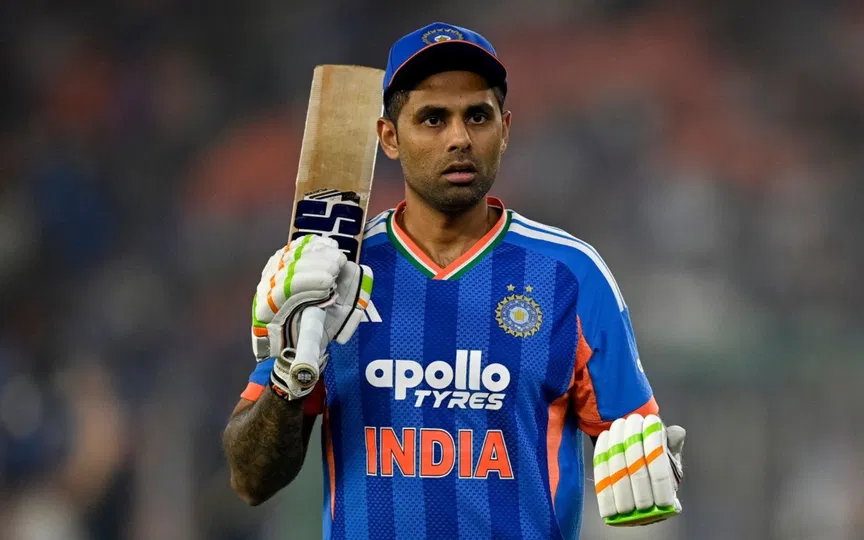
But when Rohit Sharma retired, instead of Hardik, Suryakumar Yadav was appointed as the new T20I captain, with Axar Patel being the vice captain.
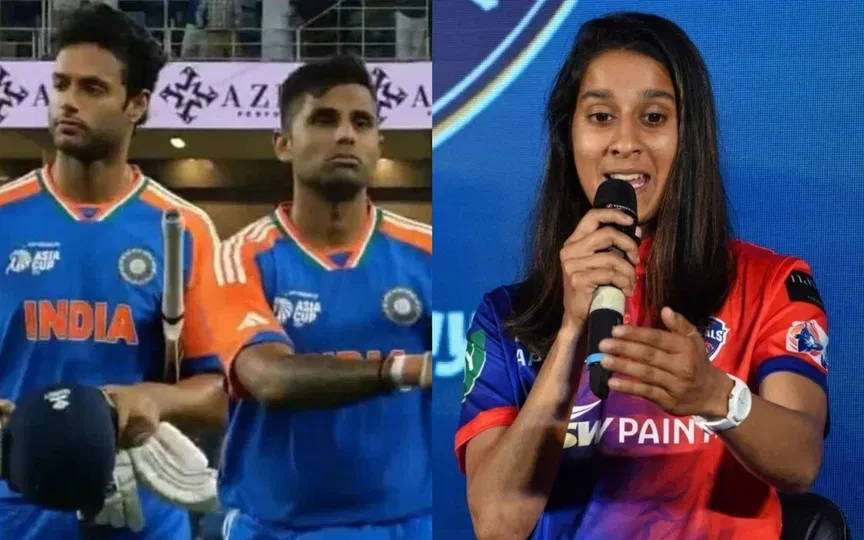
Shortly after, in 2025, Patel was replaced by Shubman Gill, only to be sacked by the end of the year, and Axar was reappointed as vice-captain for the T20 World Cup 2026.
Now, amid all this chaos, the question arises whether this is grooming or just another temporary badge?
The vice-captaincy role is reduced to a joke
The common thread across formats is unmistakable. There is no continuity. Vice-captains are no longer picked with the future in mind.
They are appointed series to series, dropped due to form, injury, or selection whims, and replaced without explanation. The role has become reactive instead of strategic.
Earlier, being vice-captain meant the management trusted you to eventually lead. Today, it often feels like a placeholder title, something to fill a column in a squad announcement, as Ajit Agarkar indicated recently.
This constant chopping and changing has stripped the position of authority. A vice-captain who knows he could be replaced in a few weeks is unlikely to be empowered within the dressing room.
Players stop seeing the role as meaningful. Fans stop taking it seriously. Most importantly, India has stopped grooming leaders.
No all-format leadership material after Kohli. Rohit
Virat Kohli was a perfect successor to MS Dhoni as an all-format captain. After Kohli, Rohit assumed the role. But after Ro-Ko, we see no player who is worthy or even ready to take up the responsibility of captaincy across all formats.
That grind, desire and hunger are missing. And the management’s approach under Gautam Gambhir is doing more harm than any good.
Instead of preparing the next captain over the years, the team now seems content to improvise when the moment arrives. That may work occasionally, but it is not a system. It’s a gamble.
Final thought
Vice-captaincy in Team India hasn’t disappeared overnight. It has slowly eroded, diluted by indecision and short-term thinking. What was once an ascending path to leadership has become an ever-rotating label.
Unless Indian cricket rediscovers the value of patience and planning, the vice-captaincy position can become yet another unnecessary title, bereft of power, purpose, or promise.