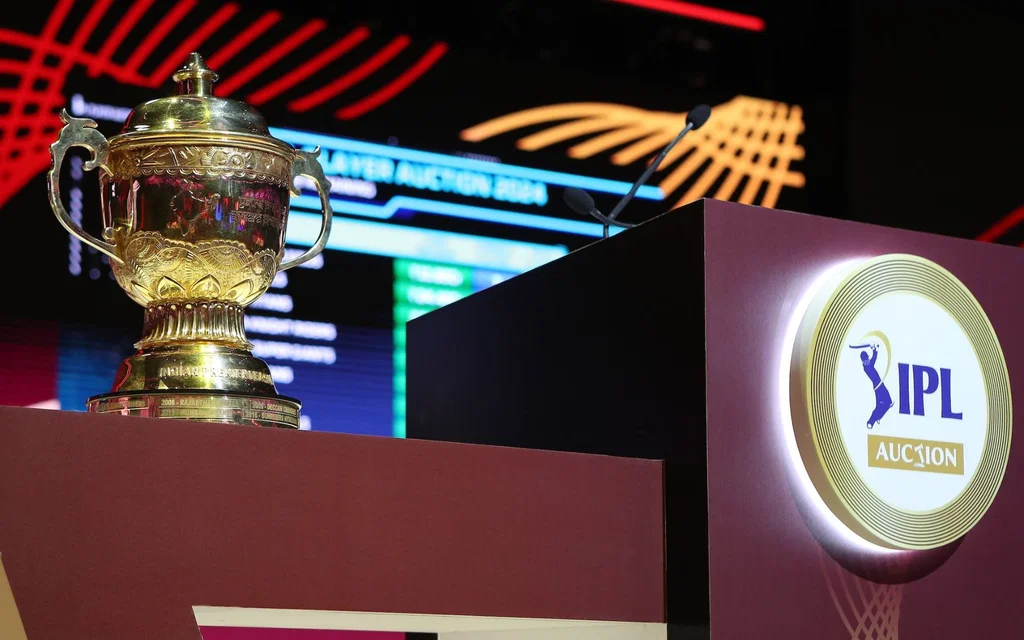
 IPL Auction 2026 (Source: X.com/@Ayyappan_1504)
The much-awaited IPL 2026 mini-auction is set to take place on 16 December 2026. All teams have a combined purse of ₹237.55 crore to spend at the 2026 IPL auction. With less than 24 hours left before the anticipated bidding process, the Etihad Arena in Abu Dhabi, UAE, is set to become a melting pot for all franchise owners and management seeking to fix the loopholes in their existing squads.
Among the many Indian Premier League auction rules, the least known tie-breaker rule has become a talk of the town ahead of the high-octane bidding. That said, let's take a look at what this rule is and what it's intended to address.
Tie-breaker explained: BCCI's innovative way to settle to bidding draws in IPL 2026 Auction
Tie in white-ball cricket results in the highly entertaining Super Over. But what happens when a tie occurs in the IPL auction?
Anticipating this situation, the Board of Control for Cricket in India (BCCI) introduced a new tie-breaker rule for the event in 2010. Since then, it has been used on only three occasions.
The silent tie-breaker was designed for situations in which two franchises reached the same “last bid” for a player, and one had already exhausted its purse.
In this condition, both the franchises need to submit a confidential envelope with a written bid noting how much extra money they are ready to pay apart from the final auction bid. Notably, this bonus was paid directly to the BCCI.
Neither did it affect the franchise’s purse, nor did it have an upper limit. Moreover, if the written bids still matched, the process was repeated until a winner was found.
How is the IPL Auction's tie-breaker mechanism used?
The process created, aiming to resolve the draws in auctions with smaller purses, especially the mini-auctions, has only been used three times in the tournament's history: Kieron Pollard and Shane Bond in 2010, and Ravindra Jadeja in 2012.
In the 2010 auction, the Mumbai Indians had to fend off bids from the Chennai Super Kings, the Royal Challengers Bangalore and the Kolkata Knight Riders to claim the services of 22-year-old Kieron Pollard. After all four franchises hit the maximum permitted bid of USD 750,000, auctioneer Richard Madley had to activate the silent tie-breaker.
As per the rule, all the teams offered a secret extra bid, with MI reportedly offering USD 2.75 million to win the battle for Pollard, making him the costliest player of the day. Further, the same mechanism was used again to settle the bidding for Bond.
Lastly, in 2012, when Deccan Chargers (now Sunrisers Hyderabad) and Chennai Super Kings both surpassed the USD 2 million cap for Ravindra Jadeja. The silent, closed-door bidding war was used to resolve the situation, and CSK’s higher offer secured the all-rounder.
.jpg?type=mq "Gambhir hypocrisy?")