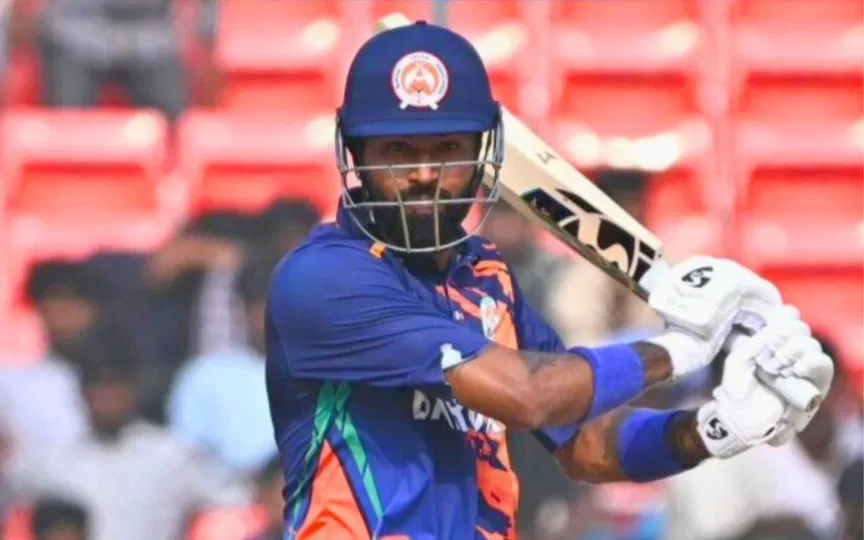
![The problematic approach of Gautam Gambhir as head coach [Source: @KkrKaravan/X.com]](https://onecricketnews.akamaized.net/parth-editor/oc-dashboard/news-images-prod/1765555070219_Gautam_Gambhir_India_T20_World_Cup.jpg?type=hq) The problematic approach of Gautam Gambhir as head coach [Source: @KkrKaravan/X.com]
The problematic approach of Gautam Gambhir as head coach [Source: @KkrKaravan/X.com]
Indian cricket has always thrived on a simple principle of trusting the right players in the right roles. For years, this stability helped India dominate across formats.
But under Gautam Gambhir, both the Test and T20I teams suddenly find themselves in an uncomfortable whirlwind, one where role clarity is fading, experimentation is becoming routine, and the timing of these changes feels more alarming than innovative.
With the T20 World Cup 2026 just a month away, India should ideally be polishing combinations, locking roles, and building confidence.
Instead, the team is still juggling batting orders, promoting all-rounders to unfamiliar positions, and shuffling key roles in the middle order.
And fans, experts, and former cricketers are now asking the same question: Is India experimenting with itself into confusion?
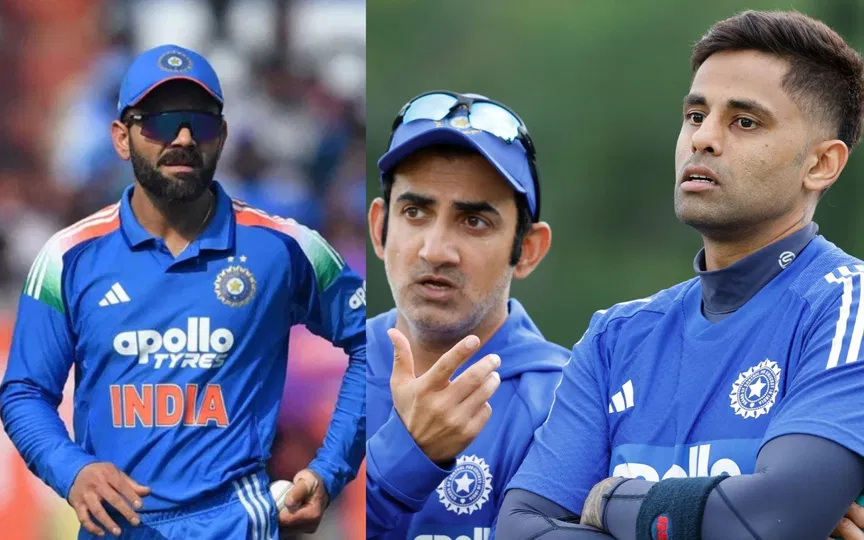
The T20I Chaos: Changing a settled formula at the last minute
After the T20 World Cup 2024 title victory, India bid goodbye to its core featuring Rohit Sharma, Virat Kohli and Ravindra Jadeja.
The young team then rebuilt itself under the leadership of Suryakumar Yadav and settled quickly. Every role, every position and every bowling change was working fine until Gautam Gambhir took charge.
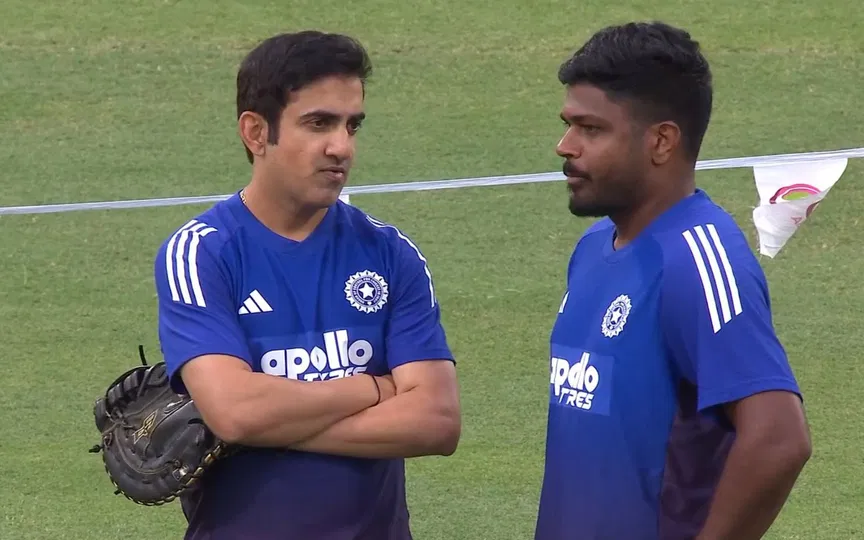
Shubman Gill was included as vice-captain without any merit in the format, replacing Sanju Samson as opener. The same Samson who scored three T20I hundreds in a single year as an opener.
Most recently, Axar Patel batted at no. 3, Samson went from no. 5 to no. 8 on a couple of occasions before eventually getting dropped for Jitesh Sharma, and Shivam Dube dropped to no. 8. To add to that, Arshdeep Singh, India’s leading wicket-taker in T20I, is also struggling to become a mainstay in the playing XI.
Naturally, India now have an unsettled core. Remember, all this is happening with the T20 World Cup 2026 being less than 2 months away.
The problem isn’t experimentation itself. Every team experiments. The problem is timing and frequency. When your foundation is solid, you don’t yank out bricks for the sake of trying something new.
The Test confusion: All-rounders at no. 3?
In the longest format, Gautam Gambhir’s rotational approach has raised even bigger questions. Promoting Washington Sundar to no. 3 might look bold on paper, but it disrupts a role traditionally reserved for technically solid batters who anchor innings.
Dropping Karun Nair and Sai Sudharsan after a few failures has left the no. 3 position, the most crucial one in the format, unsettled.
Such decisions aren’t one-offs. India has used 24 Test players in just 18 months under Gambhir, a churn rate higher than any recent coaching era.
While the coach defended his tactics as part of a “transition phase,” the on-field randomness suggests otherwise.
Test cricket is built on consistency. The no. 3 role is not an experiment. It is the spine of a batting lineup. Treating it like a trial slot weakens the very structure of the team.
Why role clarity matters more than ever?
Cricket has evolved into a role-based sport. Teams thrive when players walk in knowing exactly what is expected of them.
Role clarity builds confidence, stabilises the dressing room, eliminates hesitation in pressure moments, and helps players specialise rather than adapt constantly.
When a batter walks in unsure of his role for the day, he is already half out. India’s greatest white-ball teams, 2011, 2013, 2016, and 2024, excelled because each role was sharp, well-defined, and consistent.
Today’s India, especially in T20Is, looks like a team searching for answers it already had.
Experiments are fine, but not like this
Experimentation has value when done early, systematically, and with purpose. But not weeks before a World Cup. Not at the cost of your best performers. Not by unsettling players already thriving in certain roles. Not by turning stability into musical chairs.
India isn’t lacking talent. It isn’t lacking firepower. It’s lacking clarity, the one thing that separates champion teams from confused ones.
Gautam Gambhir needs a reality check
The intent of Gautam Gambhir may be to modernise India’s cricket thinking and somehow infuse a revolution to take credit for. But even modern cricket rests on stable cores and clearly defined roles.
India doesn’t need more experiments, but it needs direction. With two major formats already showing cracks caused by constant tinkering, the team must urgently return to basics.
Role clarity isn’t old-fashioned. It’s the foundation of success. And right now, India needs that foundation more than any experiment.