![Gautam Gambhir faces heat amid split coaching debate [Source: @Oxygen18_/X.com]](https://onecricketnews.akamaized.net/parth-editor/oc-dashboard/news-images-prod/1765602309681_Gautam_Gambhir_India.jpg?type=hq) Gautam Gambhir faces heat amid split coaching debate [Source: @Oxygen18_/X.com]
Gautam Gambhir faces heat amid split coaching debate [Source: @Oxygen18_/X.com]
Indian cricket stands at a crossroads again. Yet this time, the debate is more intense towards leadership, philosophy, and a structure that may finally need reform more than about batting orders, overseas failures, or selection puzzles.
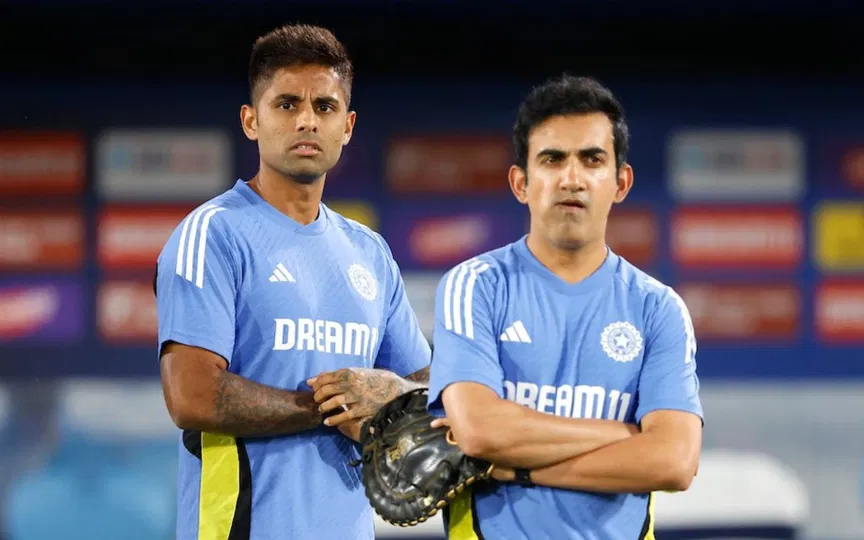
Gautam Gambhir’s tenure as India’s all-format head coach has produced two sharply contrasting storylines: white-ball dominance and red-ball decline.
And that divide is exactly why the idea of split coaching, once dismissed as unnecessary for India, is now gaining serious traction.
White-ball success can’t hide red-ball fault lines
On paper, Gambhir’s limited-overs resume is solid and arguably impressive. India lifted the Champions Trophy 2025 and Asia Cup 2025 under him and remained decently competitive in the T20I series.
While the T20 World Cup 2026 will be his ultimate litmus Test, Gautam Gambhir is relatively successful as a coach in ODIs and T20Is. But the moment the format switches to whites, the narrative flips.
India have lost five out of their last nine home Tests, suffered a home whitewash against New Zealand, and went down 1-3 in Australia. In England, India drew 2-2 under the captaincy of Shubman Gill.
Just four wins in 13 Tests under Gautam Gambhir tell their own story. India are below Pakistan in the WTC table. Yet what frustrates fans and former cricketers is the deflection, such as transition talk, excuses about injury lists, and repeated reminders about past triumphs.
Pointing out Shubman Gill’s injury or the team’s inexperience can explain a defeat or two, but not a pattern stretching over 16 months.
The case for split coaching is stronger than ever
Former players like Harbhajan Singh, Kapil Dev, and several analysts have stated a simple truth that India today effectively operates as two separate teams. The personnel, roles, workloads, and calendars differ wildly between formats. Split coaching may seem a demotion. But it’s actually a structural upgrade.
Here’s why the model fits India now:
The Test team needs dedicated, specialist attention
India’s red-ball unit is in flux with retirements, unstable batting positions, injury interruptions, and inexperienced bowlers. It needs the kind of deep planning and long-format understanding that a single, overburdened coach cannot always provide. A red-ball specialist could focus solely on five-day cricket, rebuilding the culture and identity India once prided itself on.
Gambhir’s strengths clearly lean toward white-ball cricket
His white-ball results are not accidental. Gautam Gambhir understands tempo, matchups, and the evolving logic of limited-overs cricket. He has built fearless dressing rooms. A split setup would allow him to double down on what he is clearly good at without dragging him through a Test rebuild he hasn’t managed well.
Reduces workload and prevents burnout
International cricket is a 12-month cycle. One coach handling three formats, travel, media pressure, analytics, preparation, and selection, is unsustainable. Split coaching shares the emotional and logistical load.
Modern cricket has moved on
International cricket is a 12-month cycle. One coach handling three formats, travel, media pressure, analytics, preparation, and selection, is unsustainable. Split coaching shares the emotional and logistical load.
Gambhir’s defensiveness hasn’t helped
Not to forget, Gautam Gambhir’s retorts, “Don’t interfere in others’ domain,” or “I’m the same guy who won the Champions Trophy”, signal a coach feeling cornered.
Instead of confronting the Test failures head-on, the narrative keeps shifting to excuses or past glories. That isn’t what Indian cricket needs during a foundational transition.
Time for a bold decision
Split coaching is not a punishment. It is an opportunity. India can retain Gautam Gambhir and his increasingly effective leadership in white-ball cricket while bringing in a Test specialist who can rebuild discipline, consistency, and adaptability in the longer format.
Protecting the team’s red-ball legacy must outweigh protecting any coach’s ego. India should seriously consider adopting split coaching, and Gambhir’s Test role should be the first to be re-evaluated.
The format has exposed his limitations, and continuing down this path risks stagnation. A modern structure for a modern cricket powerhouse is no longer optional.
.jpg)
.jpg?type=mq "WBBL final: WTW")