.jpg?type=hq) Pat Cummins and Ben Stokes shake hands after MCG Test (Source: AFP)
Pat Cummins and Ben Stokes shake hands after MCG Test (Source: AFP)
The recently-concluded two-day MCG Test between Australia and England has ignited a fresh debate about the quality of pitches in Test cricket. But another parallel debate about the batting technique and temperament of the modern-day batters has also taken the centre stage.
The decline in the number of days in the Test matches in the ongoing calendar year has become a serious concern for the traditional format of the game.
The number of days in the Tests in 2025:
| Criterion | Data |
| 2-day finish | 2 |
| 3-day finish | 15 |
| 4-day finish | 11 |
| 5-day finish | 14 |
| Total Matches | 42 |
With only 33.34 percent of the year's total matches getting played for the five days, the legacy of Test cricket seems to be in jeopardy. Besides that, 15 Tests have finished on the third day, alongside 11 matches entering the day four. Two matches, both from the ongoing Ashes 2025-26 have ended in just two days.
The Test series between England and India in England have been the only series in 2025, in which all the games were played till the fifth day. It also reflected the level of competition between both the teams.
Meanwhile, there come all kinds of views when a Test match ends within a time of less than four days. Most of these opinions fall in the radius of criticizing the pitches but there are also a few former cricketers or experts who raise the concern of the batting technique.
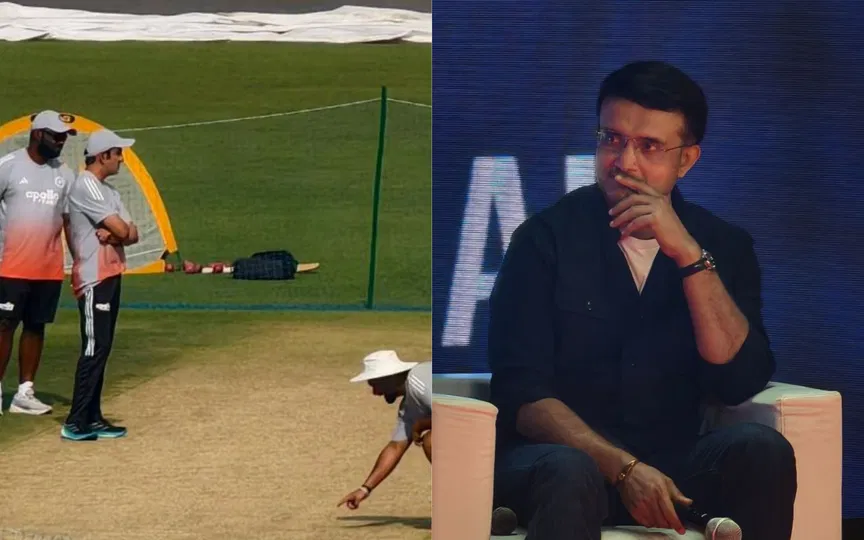
The debate of flawed pitches and batting techniques
Criticism for the Pitches
As usual, a lot of blunt, selective or neutral opinions about the pitch, stormed in the cricketing diaspora after another two-day game. It began with former England veteran Kevin Pietersen bashing the selective approach of the experts who criticize the pitches in India but stay silent on the same in SENA conditions.
“India always gets hammered when wickets fall like crazy on day 1 of a Test, and so I hope that Australia gets the same scrutiny! Fair is fair,” wrote Pietersen in his X post after 20 wickets fell on day 1 of the MCG Test between Australia and England.
In the same line of events, former England captain Alastair Cook directly slammed the MCG surface after the first day fiasco for both teams. “This is not a great Test wicket. Unless this flattens out on days two, three, and four, if we get three, then that was too heavily weighted in the bowlers’ favour. The bowlers did not have to work that hard for wickets,” said Cook while speaking on TNT sports.
Questions on batting techniques and defence of pitches
Meanwhile, the former Australian pacer Jason Gillespie came up with an opinion completely south to Pietersen and Cook’s views. The ex-Aussie star defended the MCG track alongside questioning the batters.
“My overriding feeling is the batting hasn’t been as good as it could be. I can’t believe what I’ve seen to be honest. Yes there’s movement off the surface and a little through the air. But I wouldn’t say there’s demons on the surface,” said Gillespie to ABC during the fourth Ashes Test.
Notably, the former legendary India batter Sunil Gavaskar had also been of the opinion that resembled Gillespie’s stance.
“It's been a situation ever since the White ball game has come in. Uh, the white ball game encourages batters to play with hard hands, where you're looking to push at the ball to get the ball away. Now on pitches where the ball is doing something, whether it is seam swing turn, I think you need to be playing with at least one soft hand, if not two soft hands,” said Gavaskar to India Today after Team India's defeat in the home Test series against New Zealand last year.
“And therefore you know that bat speed, which can be then controlled, where the edges, which are now going to the slip fielders would fall just a little short if you played with soft hands. So it's the bat speed that has been the cause, because India is now playing a lot more of the white ball game than test matches,” he added later.
The dissection
Gavaskar categorically emphasized the increasing trend of white-ball cricket affecting the batting technique in Test cricket. The number of franchise T20 tournaments and batters prioritizing the white-ball cricket has compromised their temperament and technique in the longest format of the game.
The batters have been seen struggling on the challenging wickets, be it spin-friendly, pace-friendly or a bit hard to bat on. The influence of white-ball cricket has been observed in the declining number of five-day Tests matches in the ongoing calendar year.
Gavaskar’s stance also hints towards the fact that the shorter Test matches have been because of the poor batting techniques. Blaming the pitches all the time seems to be a cushion to cover the batting flaws instead of a real concern to address.
.jpg)
The economical repercussions of shortest Test matches
Apart from the technical point of view, the shorter Test matches severely impact cricket’s economy. Notably, the two Test matches ending in just two days in the ongoing Ashes 2025-26 has brought a big loss from the economical perspective for Cricket Australia.
Earlier in the Perth Test, the Aussie cricket board had to announce a refund of ticket prices to the spectators for the remaining three days. The decision came in the aftermath of the game’s conclusion on the second day.
Furthermore, they were again forced to announce the refund for remaining three days after the recently concluded MCG Test lasted for just two days.
Apart from the loss from the refund of the tickets, the financial hit for Cricket Australia continues to the downfall on the scale of broadcasting. Test matches ending on second or third days influences a dip in the bidding prices for the broadcasting rights in the next cycle.
In the same vein, Cricket Australia CEO Todd Greenberg also expressed his disappointment and concern around the shorter Test matches.
“As mesmerising and fascinating and enjoyable as it was to watch as a fan, we want Test cricket clearly to go for longer,” said Greenberg after the end of MCG Test in two days.
“A simple phrase I'd use is short Tests are bad for business. I can't be much more blunt than that. So I would like to see a slightly broader balance between the bat and the ball. I thought yesterday slightly favoured the ball. The batters have some ownership in some of that, it's not all around the pitch, but we've got some challenges,” he added later.
Conclusion: A time to rethink for both Curators and Batters
The above-discussed debate and pointers concerning the increasing number of shorter Test matches hints towards the need of improvement. Now, it’s a high time for Curators to think about the competitive surfaces.
On the other hand, the jury is also out for the batters which pushes them to work hard in order to improve their technique on the challenging tracks.