![David Steele [Source: X/@fredfertang]](https://onecricketnews.akamaized.net/parth-editor/oc-dashboard/news-images-prod/1765873998208_DavidSteele(1).jpg?type=hq) David Steele [Source: X/@fredfertang]
David Steele [Source: X/@fredfertang]
The 1970s remain famous in the history of the Ashes for England's continuous struggle against their arch-rivals. They often had to resort to desperate measures to break the streak against Australia. The story of David Steele is one such tale of resilience and inspiration in English cricket.
England lost the 1974-75 Ashes down under 4-1 thanks to the relentless pace and bouncers delivered by Dennis Lillee and Jeff Thomson. The Ian Chappell-led Australians were ruthless and used every tactic in the book, including excessive sledging, to gain the advantage.
After playing the first limited-over World Cup in 1975, which West Indies won by beating Australia in the final, most of the Australians stayed back to play the 4-Test series as part of the Ashes return tour. The visitors were overwhelmingly favourite to clinch a whitewash.
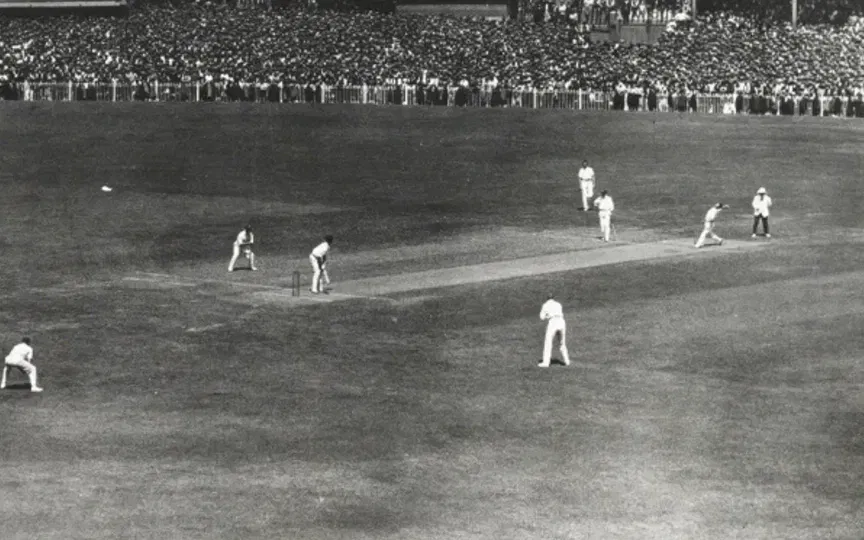
The terror of Lillee-Thomas
The first Test at Edgbaston proceeded exactly as predicted. Lillee and Thomson utterly decimated England, with each bowler taking a 5-wicket haul. England could score only 101 and 173 runs in the match and lost by an innings and 85 runs.
The England team management needed to make some changes, and captain Tony Greig decided to show his faith in a 33-year-old middle-order batter, David Steele, a consistent performer for Northamptonshire. Steele even scored a century against the Australians in a practice match during the tour.
The moment Greig handed the Test cap to him, Steele was visibly moved. With his distinctive glasses, calm demeanour, and streaks of white hair, David Steele appeared older than his age, prompting Clive Taylor, the renowned cricket writer for The Sun, to famously describe him as "a bank clerk who went to war".
.jpg?type=mq) Source: X/@fredfertang
Source: X/@fredfertang
Steele took the opportunity with both hands. In the second Test at Lord’s, he was promoted to bat at No 3, in front of the fearsome combination of Lillee and Thomson. He walked in with the score on 10/1 and lost three more partners- all to Lillee before the score reached 50. Captain Greig joined him, and Steele justified the skipper’s call as the duo added 96 runs for the fifth wicket.
David Steele: England's answer to fearsome Aussie attack
Steele was in his regular gutsy self and did not look out of place in front of the barrage of bouncers from the Australian fast bowlers. He batted nearly three hours to reach his maiden Test fifty and gave a good platform to England. His determination and courage against the fierce Aussie attack inspired his teammates in the challenging circumstances.
They eventually took the total to 315, with Greig top scoring with 96. England did even better in the second innings to post 436/7 before declaring as Steele accompanied John Edrich in a 104-run partnership.
For the remainder of the series, Steele became a thorn for Australia, scoring 73 and 92 at Headingly. It was the same Test match that ended in a draw as some outlaws dug up the pitch on the evening of day four, and hence, no play was possible on the final day. Even in the last Test at the Oval, Steele scored 39 and 66, and England drew the Test comfortably despite following on.
The Ashes that made a legend
Despite England's 1-0 Ashes defeat, David Steele was recognized particularly for inspiring the team with his resolve and fighting spirit. This determination led to him being voted BBC Sports Personality of the Year in 1975 and named a Wisden Cricketer of the Year in 1976.
He played five more Test matches for England against the fearsome West Indian fast bowlers in 1976 and even scored a century. Though his playing days were soon over, the legend of David Steele endured. His name was etched deep into the annals of Ashes folklore—a pivotal figure who stood firm during one of England's darkest hours.
.jpg)