![Shreyas Iyer [Source: X/@LoyalSachinFan]](https://onecricketnews.akamaized.net/parth-editor/oc-dashboard/news-images-prod/1764943131073_shreyas.jpg?type=hq) Shreyas Iyer [Source: X/@LoyalSachinFan]
Shreyas Iyer [Source: X/@LoyalSachinFan]
In recent years, the landscape of international cricket has become closely intertwined with the various formats of ICC tournaments. Each format has marquee events almost annually, including the World Test Championship, ODI World Cup, Champions Trophy, and T20 World Cup.
With the T20 World Cup scheduled within the next two months, the primary focus of the Indian team management is to finalize the squad to defend their title. However, with an ongoing ODI series with South Africa and the participation of senior players, Virat Kohli and Rohit Sharma, exclusively in the 50-over format, there are ongoing discussions regarding the 2027 ODI World Cup.
The missing piece: The legacy of No 4
One of the key areas of focus for the team management currently is identifying the most suitable batter for the number four position in the ODI team. Traditionally, the focus remains more on the openers and number three batters as teams try to maximize the impact of their best players by allowing them to face as many balls as possible.
As a result, batters like Sachin Tendulkar and Ricky Ponting predominantly batted as openers or number three batters. However, with the scoring pattern in ODIs nowadays, even 350 is considered a par score at most grounds. Achieving such high scores regularly requires sustained hitting, resulting in an increased importance of number four batters.
For the Indian cricket team, currently, the number four position is a significant area of concern. They have an incumbent in Shreyas Iyer in that position, but his tryst with injuries has forced the team management to look for alternatives multiple times. Currently, Shreyas Iyer is undergoing rehab to recover from that critical spleen laceration, with internal bleeding, which he sustained during the third ODI against Australia in October.
In his absence, Ruturaj Gaikwad, a regular opener, is now batting at number four for India. Alongside Ruturaj, Rishabh Pant, Dhruv Jurel, and even Sanju Samson are among those auditioning for that vital spot for the middle-order.
Shreyas Iyer: The perfect fit
If we first look at Shreyas, he seems to be the perfect fit for this role. He has been brilliant so far in this role, especially during the 2023 ODI World Cup with his remarkable composure and consistent performance.
Despite India’s failure in the final, his tournament tally of 530 runs was impressive. He was just behind Virat Kohli and Rohit Sharma in the run tally among the Indian batters. With two hundred to his name, he showcased his ability to anchor the middle-order.
Overall, in close to 65% of his ODI innings, Shreyas Iyer has batted at number four and maintained an impressive average, almost 9 runs higher than his average in other batting positions. Four of his 5 ODI hundreds have come while batting at number four. Before the latest injury, Shreyas scored five fifty-plus scores in the last 10 innings, including a well-crafted 61 in his last innings against Australia.
| Shreyas Iyer at different batting positions in ODI | At No 4 | Other positions |
| Innings | 43 | 24 |
| Runs | 1,893 | 1,024 |
| Average | 51.16 | 42.67 |
| 100s/50s | 4/13 | 1/10 |
Absence of Shreyas Iyer: The risk, the opportunity, and the bidding war for No 4 slot
No wonder Shreyas Iyer is the prime candidate for the spot, but with his history of back issues, there is always a risk he could miss parts of the season. That’s when the Indian team management would need to have replacements ready.
Gaikwad and Pant: The trial runs
In the ongoing series, the team management has shown confidence in Gaikwad and kept Rishabh Pant on the bench. This has also marked Gaikwad’s debut as a number four batter in ODIs. With a hundred in the second ODI already, Gaikwad has made an immediate impact, but to solidify his position in the team, he needs more time and consistent performance.
Pant, on the other hand, last played an ODI more than a year back in Sri Lanka. He also returned to international cricket after recovering from several injuries. Moreover, his impact as a number four batter in ODI has not been inspiring. Over the course of 17 innings in this position, he has managed an average of 31.12 and has reached the 50-run mark only thrice.
KL Rahul: The experience India need in death
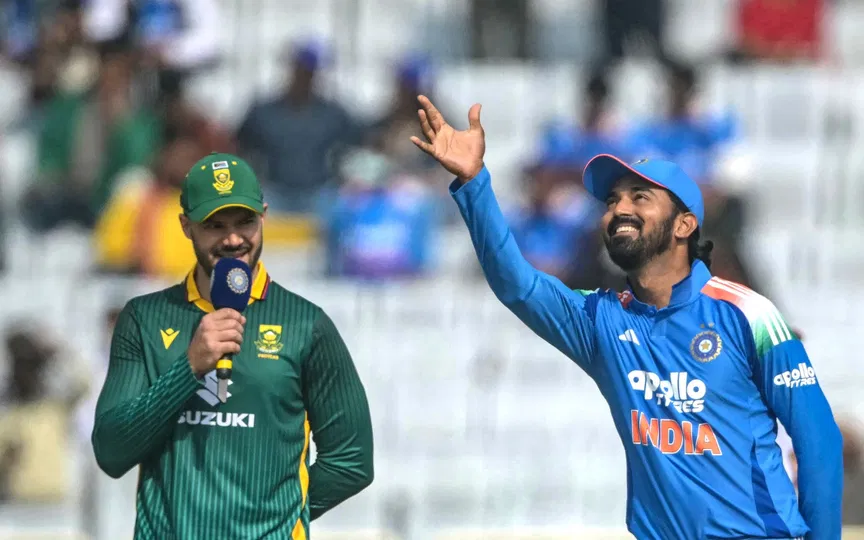
KL Rahul stands out for his good record at number four in ODIs. Although he has batted only 13 times at number four, he has made the most of the limited opportunities. He has batted at an average of 55.8 in those matches with two hundreds and three fifties.
Currently, the team management has been utilizing Rahul as a finisher, and he has excelled in that role, too, with two scores above 60 in the ongoing series. If Hardik Pandya becomes match-fit, the Indian team can play Rahul at number four. However, in the absence of Pandya, Rahul’s experience and innovative batting in the death overs become invaluable for India.
Sanju Samson: The silent contender
There are also some out-of-the-box candidates like Sanju Samson. He is currently not part of the plan, but in his only opportunity to bat at number four in an ODI, Samson scored a half-century. His capability and composure make him a good option for the role.
| Different Indian batters at No 4 position | Shreyas Iyer | Rishabh Pant | KL Rahul | Ruturaj Gaikwad | Sanju Samson |
| Innings | 43 | 17 | 13 | 2 | 1 |
| Runs | 1,893 | 498 | 558 | 113 | 51 |
| Average | 51.16 | 31.12 | 55.80 | 56.50 | 51.00 |
| 100s/50s | 4/13 | 1/2 | 2/3 | 1/0 | 0/1 |
For India, identifying the perfect number four batter in the ODI line-up is an urgent priority. The team management cannot afford a repeat of 2019 World Cup debacle. Given the limited number of 50-over games scheduled in the coming months, every match comes with the chance to test and settle on the best candidate for the upcoming World Cup.