

![World Series Cricket announcement [Source: X/@NorthStandGang]](https://onecricketnews.akamaized.net/parth-editor/oc-dashboard/news-images-prod/1764665775299_WorldSeries1(1).jpg?type=hq) World Series Cricket announcement [Source: X/@NorthStandGang]
World Series Cricket announcement [Source: X/@NorthStandGang]
With barely 200 spectators at the VFL Park outside Melbourne, the World Series Cricket began on December 2, 1977. The first match saw Australia taking on the West Indies and being bowled out for a mere 256 runs.
The origins of the evolutionary World Series Cricket can be traced back to Kerry Packer’s pursuit of broadcasting rights for Australian cricket.
The background: When Kerry Packer took on the establishment
Kerry Packer, a prominent media owner, was keen to secure exclusive coverage of the Australian cricket for his Channel Nine network. The Australian Cricket Board (ACB), however, declined his proposal. They wanted to preserve their long-standing partnership with the state-run Australian Broadcasting Corporation (ABC).
Frustrated by the repeated rejections, Packer chose to bypass the ACB entirely. He signed approximately three dozen leading cricketers from Australia, England, West Indies, South Africa, and Pakistan, and created a parallel cricketing arena. Packer trusted Tony Greig and Ian Chappell, one current and one former international captain, for most of the discussions and recruitment process.
The birth of commercial cricket
This created a rivalry with the existing powerhouse. The connections of Greig and Chappell within the cricket fraternity influenced the whole process. On the other hand, the lucrative proposal from Packer was attractive to the players, who were receiving relatively low remuneration. The entire operation remained confidential until the official announcement.
On 9th May 1977, the official news of World Series Cricket was announced. The players participating in the same were labelled as 'pirates'. Their actions were seen as a direct challenge to their respective boards, effectively bringing their international careers to a standstill.
The media called it "Packer’s Circus," owing to the unconventional nature and the controversy surrounding its inception. Packer’s lawyers eventually won the legal battle, ensuring its continuation.
World Series Cricket: the dawn of modern cricket
![Drinks break [Source: X/@PictureSporting]](https://onecricketnews.akamaized.net/parth-editor/oc-dashboard/news-images-prod/1764665972426_WorldSeries2.jpg?type=mq) Drinks break [Source: X/@PictureSporting]
Drinks break [Source: X/@PictureSporting]
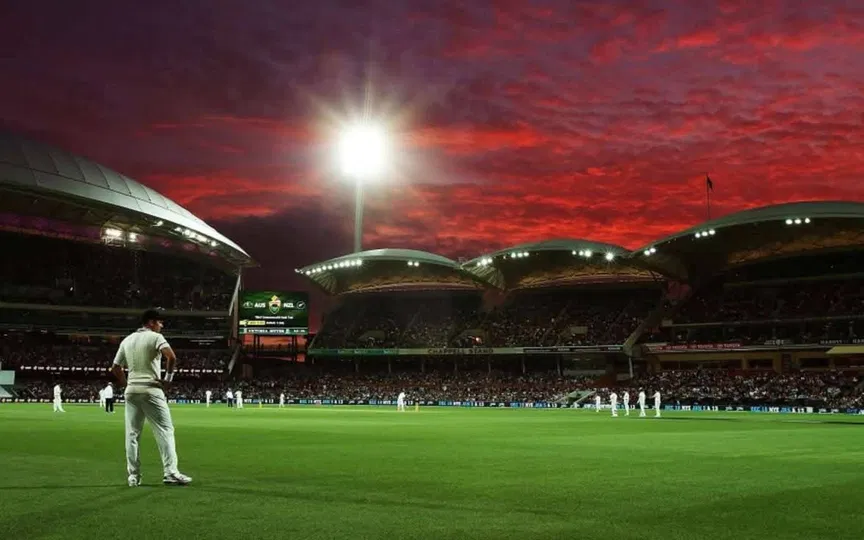
In December 1977, on this day, the World Series Cricket (WSC) "Supertests" commenced with matches involving three teams: WSC Australia XI, WSC World XI, and WSC West Indies XI. These teams featured legendary names like Viv Richards, Barry Richards, Dennis Lillee, and many leading players from both West Indies and Australia.
The initial days of the series saw limited support from the media and public, but it increased by the second season. The change in perception came largely due to the modifications. It was notable for introducing several changes to the game.
The changes ahead that brought revolution
The series gained immense popularity and ultimately fuelled the evolution of the game, thanks to the introduction of drop-in pitches, the adoption of coloured clothing for day-night matches, and the strategic decision to host games at non-traditional venues.
With growing attendance, both the cricketing boards and media began to extend their support to the players. Soon, matches started moving to the traditional cricket hosting ground. The Sydney Cricket Ground (SCG) hosted the first day-night one-day match, drawing over 40,000 spectators. The teams later completed a successful tour of the Caribbean following the immense popularity of World Series Cricket.
The ACB finally gave in. After facing huge losses, the board had no choice but to concede. By June 1979, Channel Nine was granted the exclusive rights to broadcast cricket in Australia. Although the International Cricket Council (ICC) and the England cricket authorities were not satisfied with the arrangement, the matter was eventually resolved. This not only brought revolution to cricket broadcasting but also made a profound impact on the evolution of one-day cricket.

.jpg?type=mq "All you need to know ILT20")
.jpg?type=mq "Mandhana and Palash's wedding date fixed")
