![India lost the 2nd ODI by 4 wickets [Source: PTI]](https://onecricketnews.akamaized.net/parth-editor/oc-dashboard/news-images-prod/1764784102945_virat_kohli_rohit_sharma_Rahul(1).jpg?type=hq) India lost the 2nd ODI by 4 wickets [Source: PTI]
India lost the 2nd ODI by 4 wickets [Source: PTI]
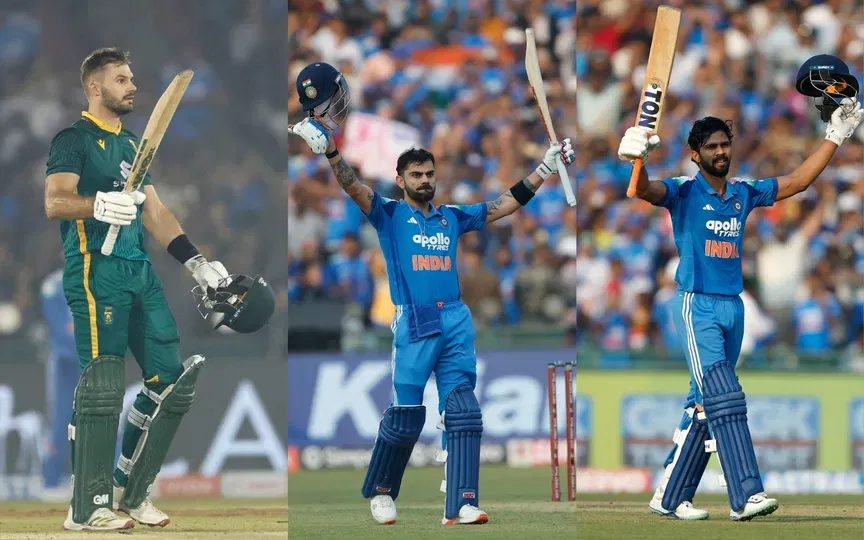
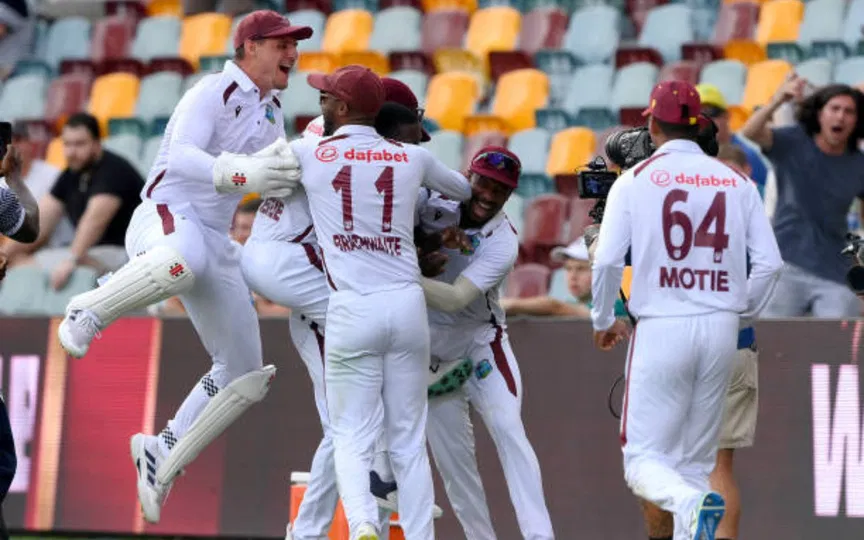
Team India lost the 2nd ODI by four wickets in Raipur as South Africa levelled the three-match series 1–1 with a record chase of 359. The Men in Blue walked into the second innings with a sense of control.
A massive total of 358/5 built on Virat Kohli’s measured 102, Ruturaj Gaikwad’s fluent 105 and captain KL Rahul’s explosive 66* looked imposing enough to seal the series. On most days in home conditions, 350-plus is a winning score but South Africa had other ideas.
In a stunning chase, they reeled in 359 with four balls to spare, riding on Aiden Markram’s commanding 110, a well-constructed 68 from Matthew Breetzke, Dewald Brevis’ game-breaking 54 off 34 and a cold-blooded finishing burst from Corbin Bosch.
India were ahead, then level, and then suddenly nowhere. The chase swung in phases and each time India could have closed the door, they let South Africa slip through.
Here are the five major reasons why India lost the 2nd ODI vs South Africa.
1. Aiden Markram’s hundred turned the chase from difficult to comfortable
The turning point of the entire chase was the solidity Aiden Markram provided upfront. Even after the early wicket of Quinton de Kock, South Africa never looked rattled because Markram absorbed the pressure, dictated the tempo and neutralised India’s plans in the first half of the innings.
His partnership with Temba Bavuma rebuilt the chase with calm rotation, ensuring the required run rate never spiralled out of control. By the time they crossed the 20-over mark, South Africa were well set, scoring freely and nudging the target into a manageable zone.
Markram’s strike rotation against spin and his ability to put away anything even marginally short meant India could not control the middle overs. His century came at a perfect tempo: quick enough to keep South Africa in the chase but safe enough to provide the ideal foundation. Once he got them to around 190 by the 30th over, the chase was running downhill.
2. Losing the middle-overs phase
This is where the match quietly slipped. Between overs 11 and 35, India neither took enough wickets nor controlled the scoring rate.
Jadeja and Washington Sundar were expected to slow things down but neither could create pressure. Kuldeep Yadav, usually India’s middle-overs enforcer, was unable to get into a rhythm. South Africa moved along at sixes and sevens without breaking sweat and every time India needed an arresting over, they conceded a boundary or allowed an easy release.
During this phase, South Africa built two crucial stands: first between Markram and Bavuma (101 runs), and then between Markram and Breetzke (90 runs). Both partnerships not only repaired but also propelled the chase. By the time Markram fell, South Africa had enough of a base to attack relentlessly.
.jpg)
3. Dewald Brevis' ferocious hitting
If Markram built the bridge, Dewald Brevis sprinted across it. When he walked in at around the 30-over mark, the match was evenly poised. Within a handful of overs, that equilibrium was destroyed.
Brevis targeted spin and pace alike, shifting momentum dramatically. His calculated aggression meant South Africa went from needing nearly nine an over to a position where seven-and-a-half felt comfortable. What stood out was the timing of his acceleration, the exact window India needed to tighten up is when he tore them apart.
Overs 35 to 40 were decisive. South Africa scored far too quickly, and Brevis’ assault left India’s bowlers visibly rattled. Even his dismissal did not slow the chase; the damage had already reduced the final 10 overs to a controlled pursuit rather than a pressure chase.
4. India’s shambolic fielding performance
In a game decided in the final over, the small moments matter enormously. India were sloppy in patches: misfields on the ring, overthrows, poor pickups and misjudged boundary attempts added up. Yashasvi Jaiswal even dropped a regulation catch of Markram when he was on 53.
South Africa constantly found twos where there should have been singles and boundaries where there should have been stops. These lapses were not catastrophic individually, but cumulatively created exactly the type of cushion a chasing side needs.
Every time India threatened to build pressure, a fielding error released it instantly. Against a team chasing 359 with so much batting depth, those errors proved decisive.
5. Lack of execution, variety and clarity in death bowling
At the 40-over mark, South Africa still needed 77 runs, very gettable but by no means a foregone conclusion. This is traditionally where India pride themselves on control. Instead, their death bowling fell apart.
The pacers struggled to hit yorkers or even maintain one consistent plan. Too many balls sat in the hitting arc, the slower balls were predictable and the execution lacked sharpness.
Arshdeep Singh bowled gamely but without real penetration. Harshit Rana mixed good balls with pressure-breaking loose ones. Prasidh Krishna had an especially forgettable outing, missing lengths at crucial times.
Adding to the chaos was the slow over-rate penalty, which forced India to keep an extra fielder inside the circle in the final overs, a crippling blow when defending such a total.
As a result, Corbin Bosch and Keshav Maharaj finished the chase without much scoreboard pressure. India simply did not ask enough difficult questions in the final five overs.
Conclusion
India didn’t lose because 358 was an inadequate score. They lost because South Africa won the key passages of play: Markram’s consolidation, the middle-overs drift, Brevis’ burst, the sloppy fielding and the chaotic death bowling.
The match flow tells the story clearly. Every time India were meant to tighten the screws, they loosened them. And in modern-day ODIs, on a dewy evening, a team as disciplined as South Africa will always punish that.
With the three-match IND vs SA ODI series now finely poised at 1–1, all eyes turn to Vizag for the decider, a venue where both teams will walk out knowing that the margin for error has vanished and the series trophy hangs squarely in the balance.

.jpg?type=mq "Highest chase in ODIs in India")