After a crushing defeat in Perth, England will be desperate to bounce back in the second Test, and there may be no better place than the Gabba, Brisbane. Once an Australian fortress, the venue feels less intimidating now, with Ben Stokes and his men carrying a sliver of recent history their way. This time, the conditions and context suggest England might finally have an opening in the venue where they have not won since 1986.
Gabba is no longer an Australian fortress
For more than three decades, the Gabba symbolised Australian dominance. From 1988 onwards, they went unbeaten at the venue for 33 years, a stretch that shaped its fearsome aura. But since India, under Ajinkya Rahane, pulled off a remarkable win in 2021, the aura has cracked.
Australia's record in the last five Tests at the Gabba
Year
Opponent
Result
2021
India
Lost
2021
England
Won
2022
South Africa
Won
2024
West Indies
Lost
2024
India
Draw
Australia have won only two of their last five Tests at the Gabba, a sharp drop from their long-standing dominance. Even more striking, their most recent day-night Test match here ended in a shock defeat to West Indies back in 2024 January, the first and only pink-ball Test Australia have ever lost.
England traditionally never likes to play in Brisbane, having last won here in the 1986 Ashes. Yet history suggests that when the Gabba stops being invincible, it collapses in clusters. During the mid-1980s (1984-88), Australia lost four out of five Tests at this venue, including one to England, before embarking on their long unbeaten streak. With Australia again showing vulnerability, England may sense the perfect moment to strike.
Starc’s pink-ball threat - but Gabba numbers offer England hope
Mitchell Starc at Gabba. [Source - AFP Photos]
Mitchell Starc remains Australia’s biggest pink-ball weapon, and no one has matched his impact under the lights in Test cricket.
Venue
Matches
Wickets
Average
Adelaide Oval
8
47
16.10
Gabba, Brisbane
3
14
29
Perth
1
9
10.77
Hobart
1
4
27
Table - Mitchell Starc's venue wise bowling record in pink-ball Tests in Australia
Of his 81 day-night Test wickets, 47 have come at Adelaide, the venue where Australia have played most of their pink-ball Tests. Starc has always done well there and has taken the bunch of wickets at a stunning average of 16.10 and a strike rate of around 33.
But the picture changes when it comes to Gabba, where he has taken just 14 wickets in three pink-ball games, averaging 29 with a strike rate of 51.6. Having said that, Starc will still be dangerous, yet these numbers give England encouragement, especially with Australia already fielding a depleted attack in the absence of skipper Pat Cummins and Josh Hazlewood.
Aussies’ batting woes and England’s lethal pace attack
Brydon Carse dismissed Steve Smith. [Source - AFP Photos]
England arrived with arguably their best touring pace attack in Australia this century, and their performance in Perth proved it. In the first innings on Day 1, their quicks averaged over 140 km/h as a group and skittled the kangaroos for just 132, only the third time equal or below to that score since 2011 that Australia have been dismissed at home.
The Gabba, is expected to offer a bit more movement, less pace and bounce, compared to Perth, which should further favour England’s fast bowlers, especially against an Australian batting unit whose numbers in pink-ball tests at this venue are not the best, barring Steve Smith.
Australian batters batting record in pink-ball Tests at the Gabba
Players
Innings
Runs
Average
Steve Smith
4
290
96.66
Usman Khawaja
5
174
34.80
Marnus Labuschagne
3
89
29.66
Travis Head
3
84
28
Alex Carey
2
67
33.50
Cameron Green
2
50
25
Overall, it has been a tough year for Australian batters, averaging just 27.65 across all Tests. Their pink-ball returns have also dipped as after averaging 37.13 from 2015–20, they are down to 28.37 since 2020. While still the best record this decade, it shows vulnerability, the same cracks West Indies exploited two summers ago.
With Jofra Archer, Gus Atkinson, Brydon Carse, and Ben Stokes forming a pace attack whose average bowling length works perfectly for a venue like Gabba, England will back themselves to put on a show in the second Test.


![Jofra Archer and Ben Stokes. [Source AFP Photos]](https://onecricketnews.akamaized.net/parth-editor/oc-dashboard/news-images-prod/1764685759698_Archer_Stokes.jpg?type=hq) Jofra Archer and Ben Stokes. [Source AFP Photos]
Jofra Archer and Ben Stokes. [Source AFP Photos]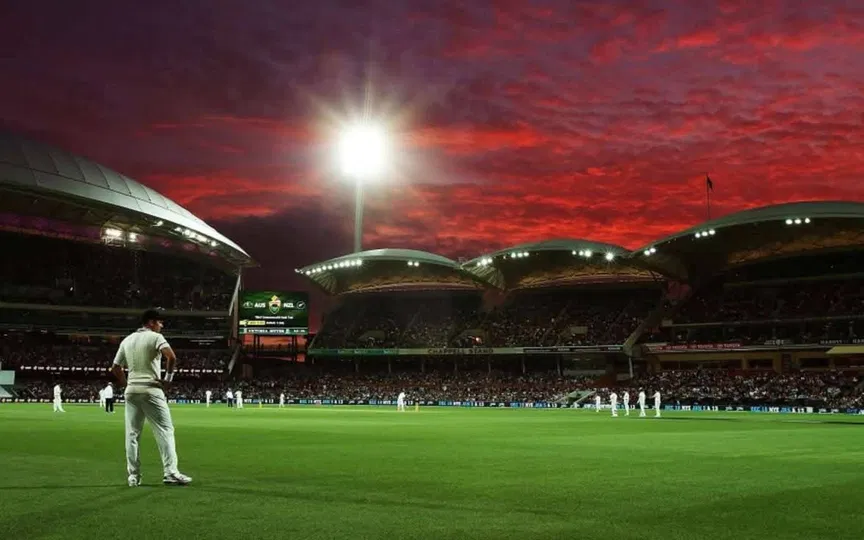
![Mitchell Starc at Gabba. [Source - AFP Photos]](https://onecricketnews.akamaized.net/parth-editor/oc-dashboard/news-images-prod/1764687453623_Starc_Gabba.jpg?type=mq) Mitchell Starc at Gabba. [Source - AFP Photos]
Mitchell Starc at Gabba. [Source - AFP Photos]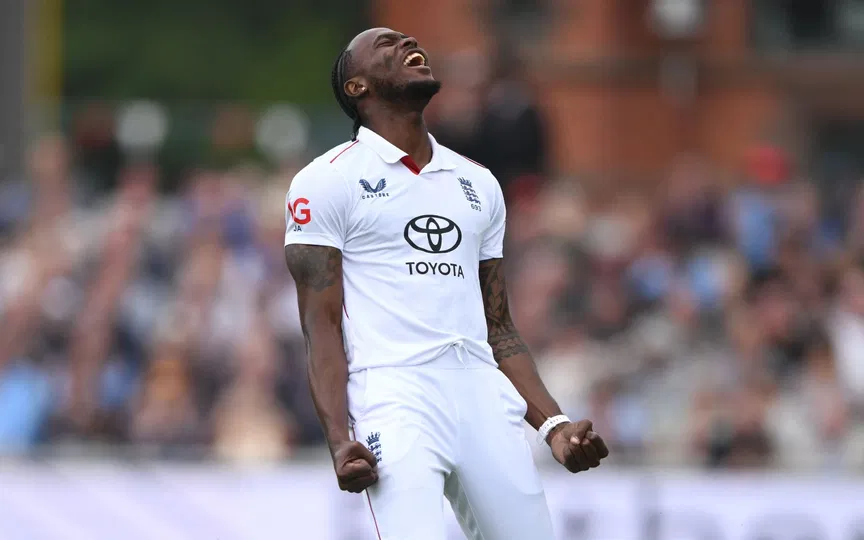
![Brydon Carse dismissed Steve Smith. [Source - AFP Photos]](https://onecricketnews.akamaized.net/parth-editor/oc-dashboard/news-images-prod/1764687701183_Smith_Carse.jpg?type=mq) Brydon Carse dismissed Steve Smith. [Source - AFP Photos]
Brydon Carse dismissed Steve Smith. [Source - AFP Photos].jpg)